Catherine Abitbol
Colombia, 1976
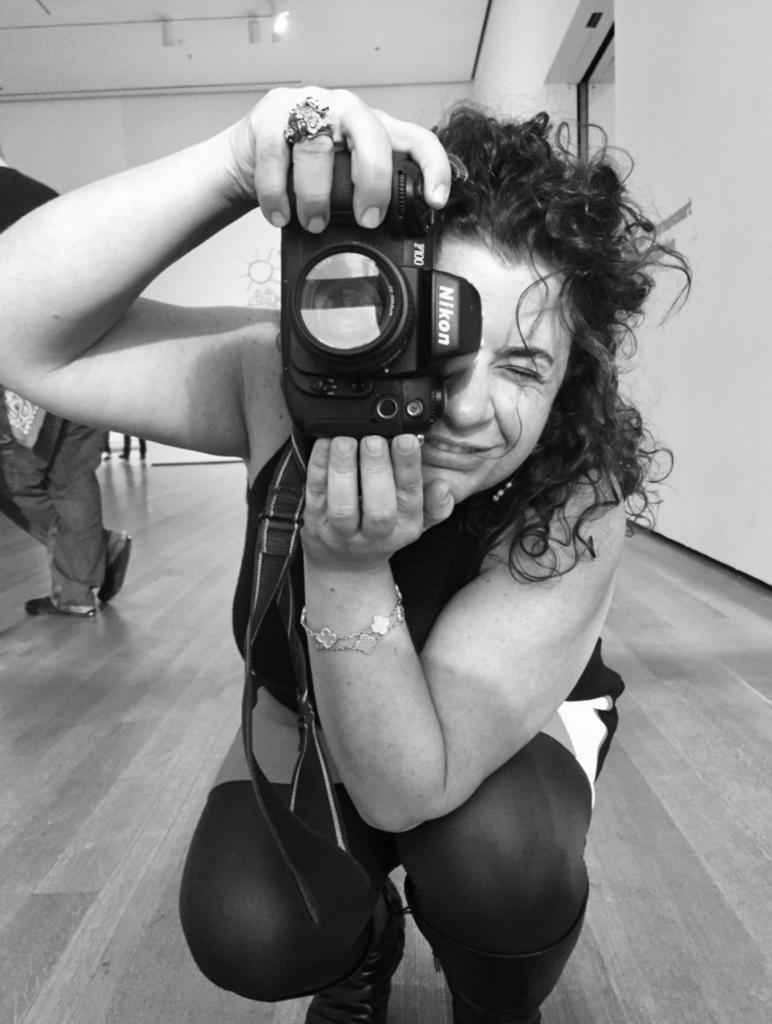
Catherine Abitbol graduated from the Art Institute of Fort Lauderdale and has a masters in Art History by Christie’s of New York, where she also did her working practices in the Photography Department. Adding to her studies in order to have a broader perspective as an artist she also took courses at the Art Center in Miami, New England School of Photography in Boston, and Escuela Activa de Fotografía Coyoacán (Mexico) as well as studying under the mentorship of Saúl Serrano in Museo de Arte Contemporáneo (Mexico).
Shortly after, she did still photography for the well-known Mexican film ‘Matando Cabos’, and started participating in a series of important collective exhibitions at Museo de Arte Contemporáneo (Mexico), Bienal de Arte PosModerno (Mexico), Museo Franz Mayer (Mexico), Museo de Arte Moderno + Fundación México Vivo (Mexico) and South Hampton Art Fair (USA).
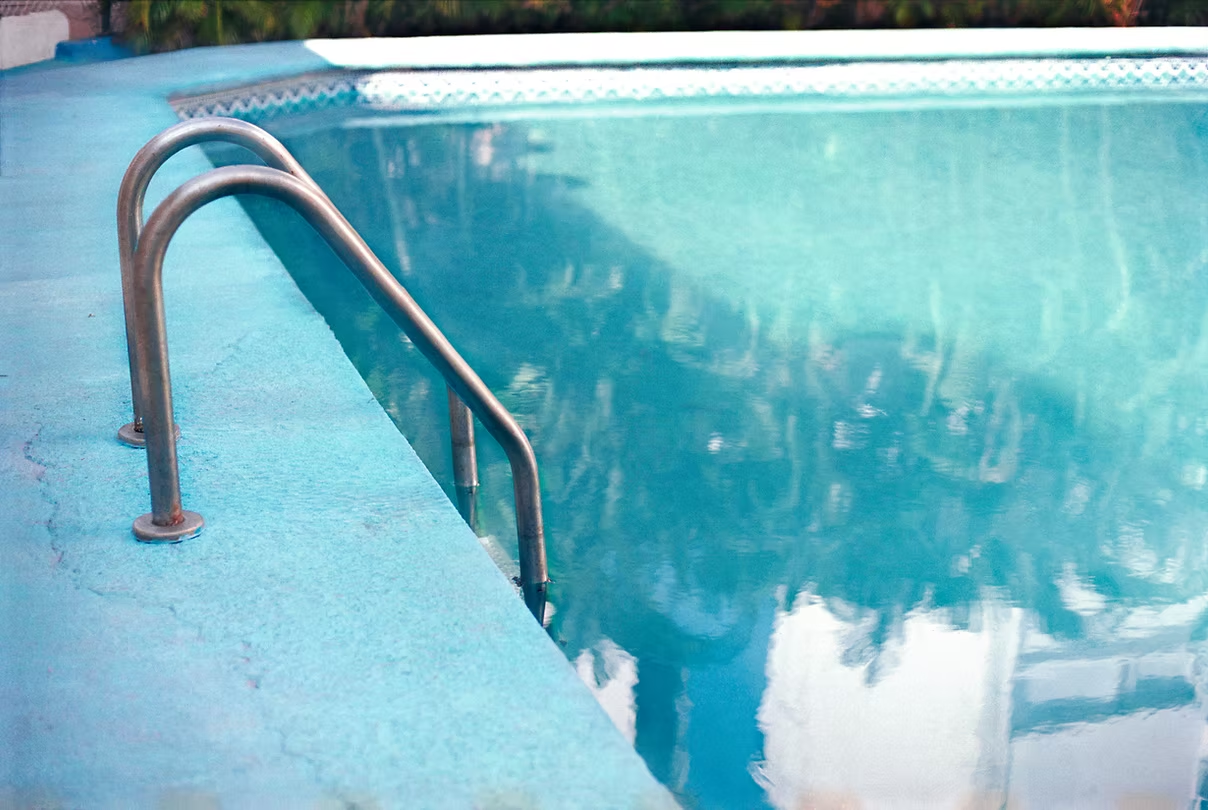
In later years, she’s had a number of solo shows and open studio at Licenciado Gallery, currently representing her and where her studio is located as a permanent residency: Fly me to the Moon (2015), Fondo de Cristal (2016), At the Water Stop (2020). She has also been a constant name at two of the most important art fairs in Mexico and LatinAmerica: ZONA MACO and Salón ACME.
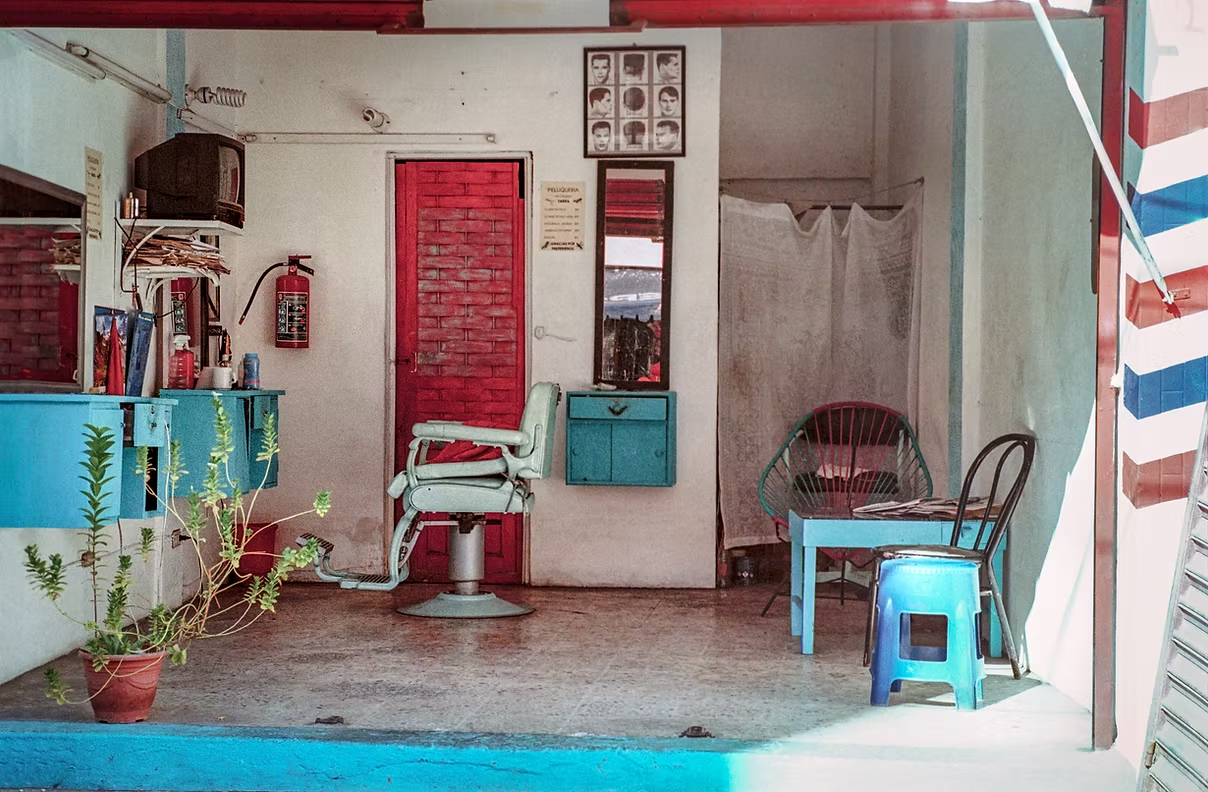
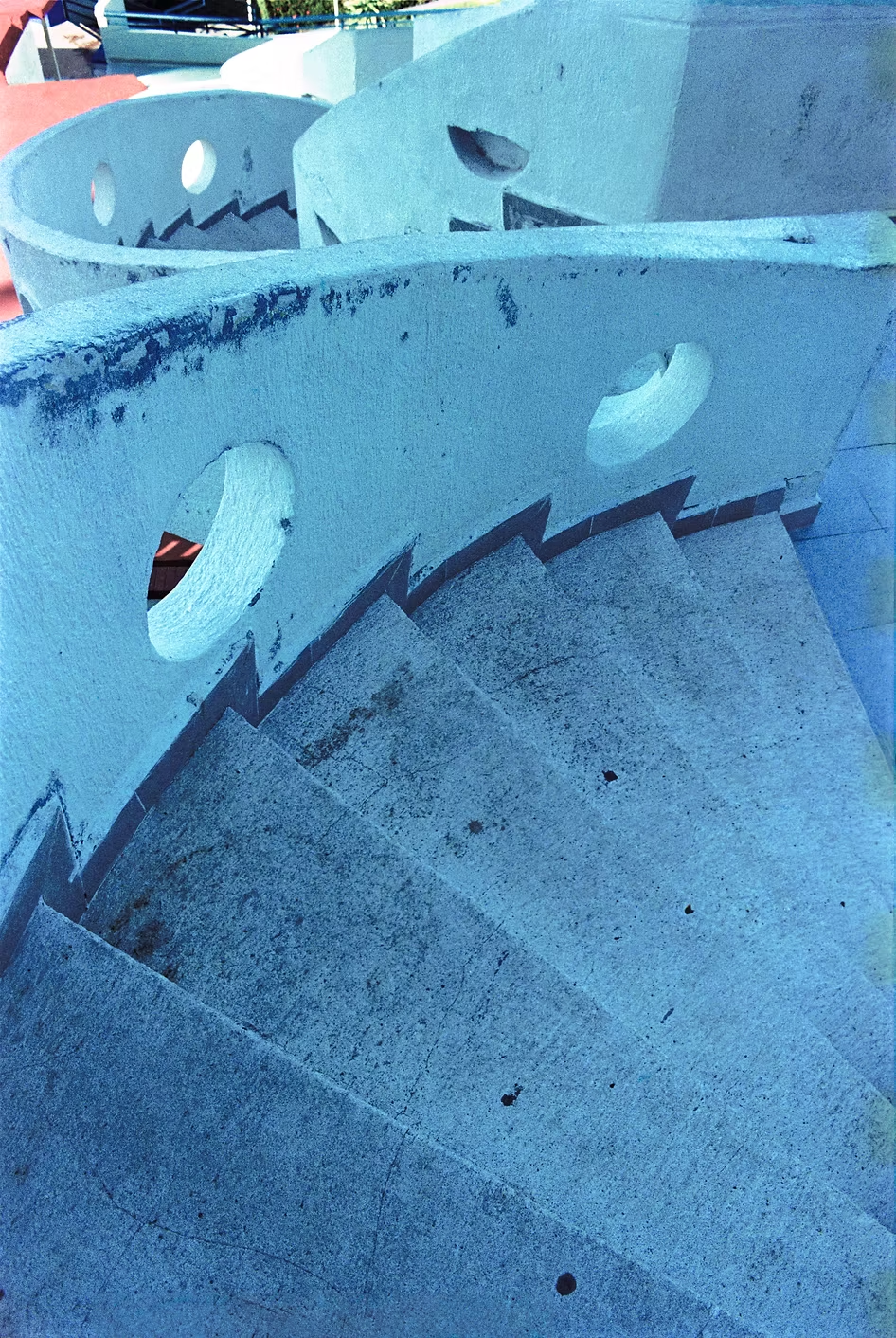
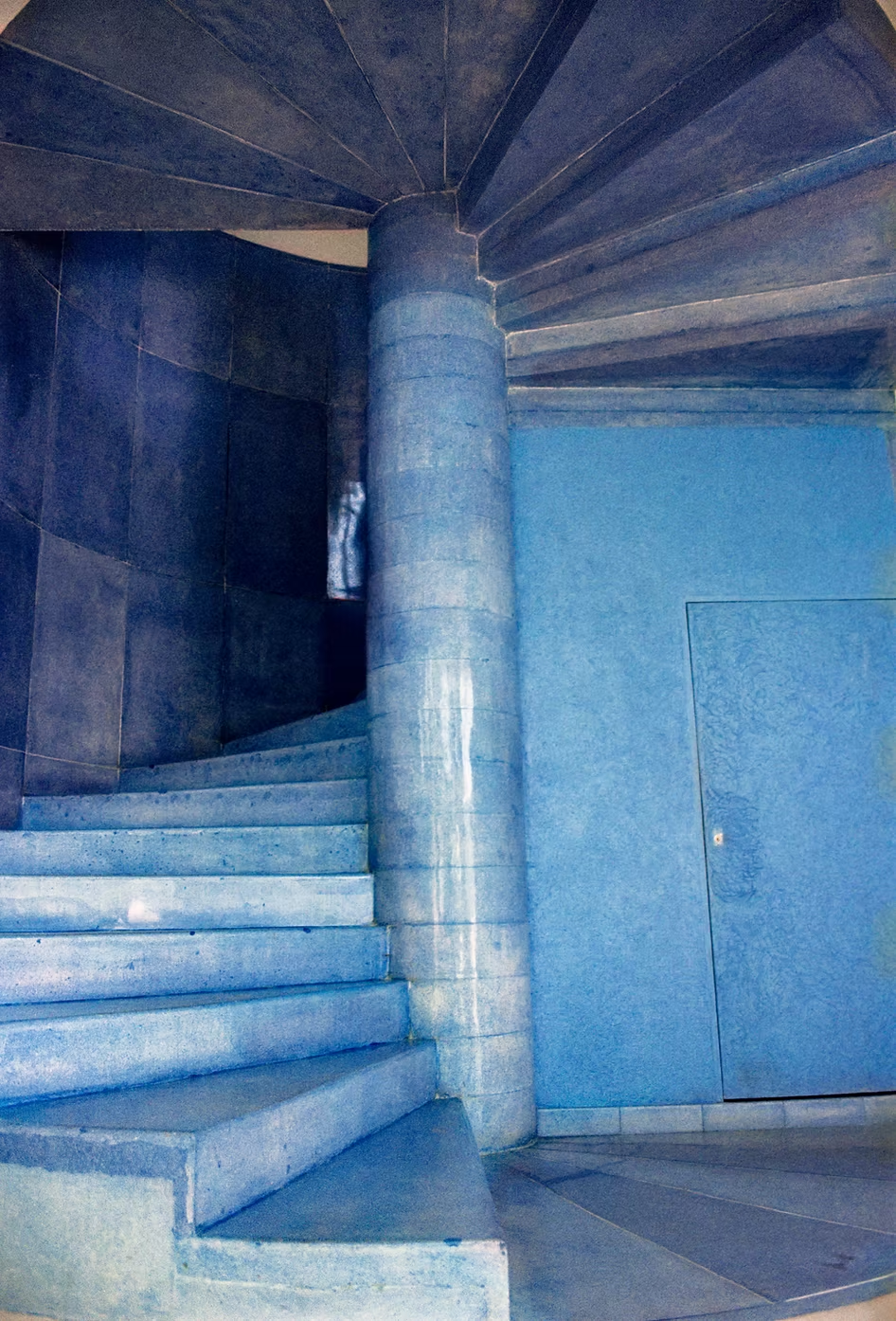
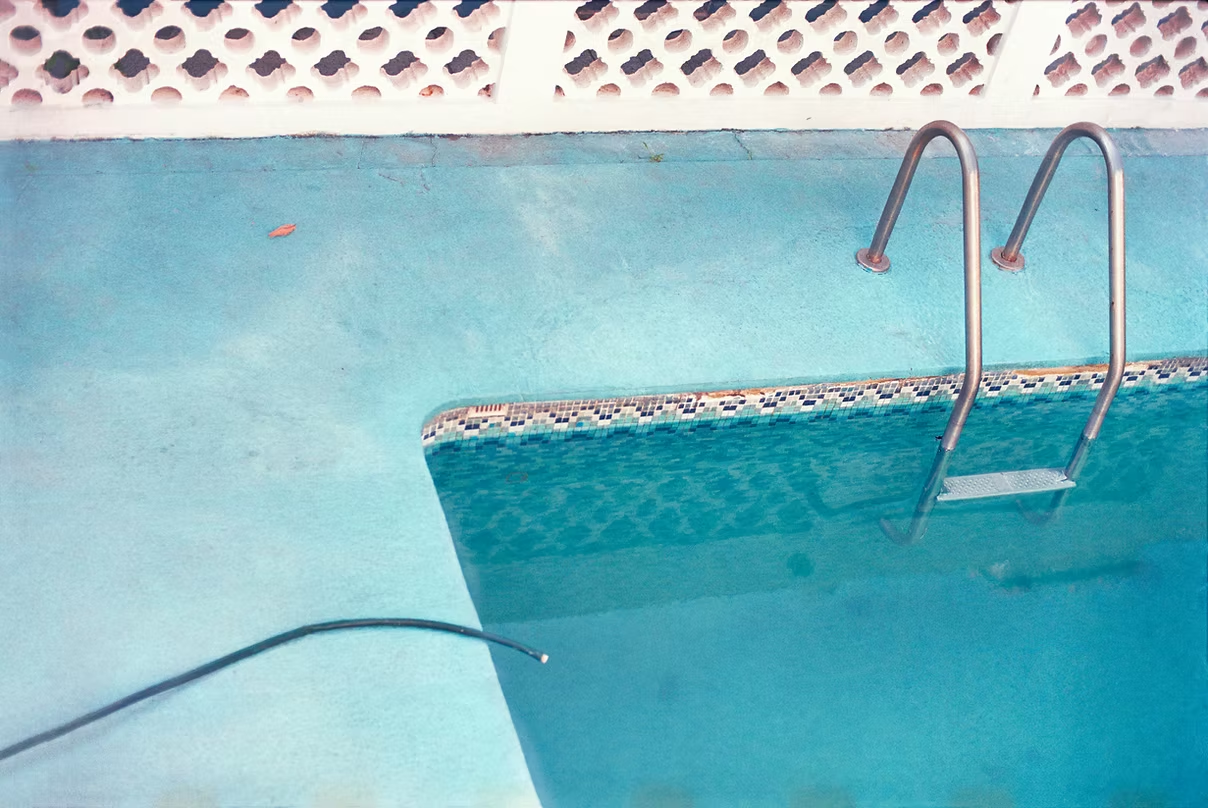
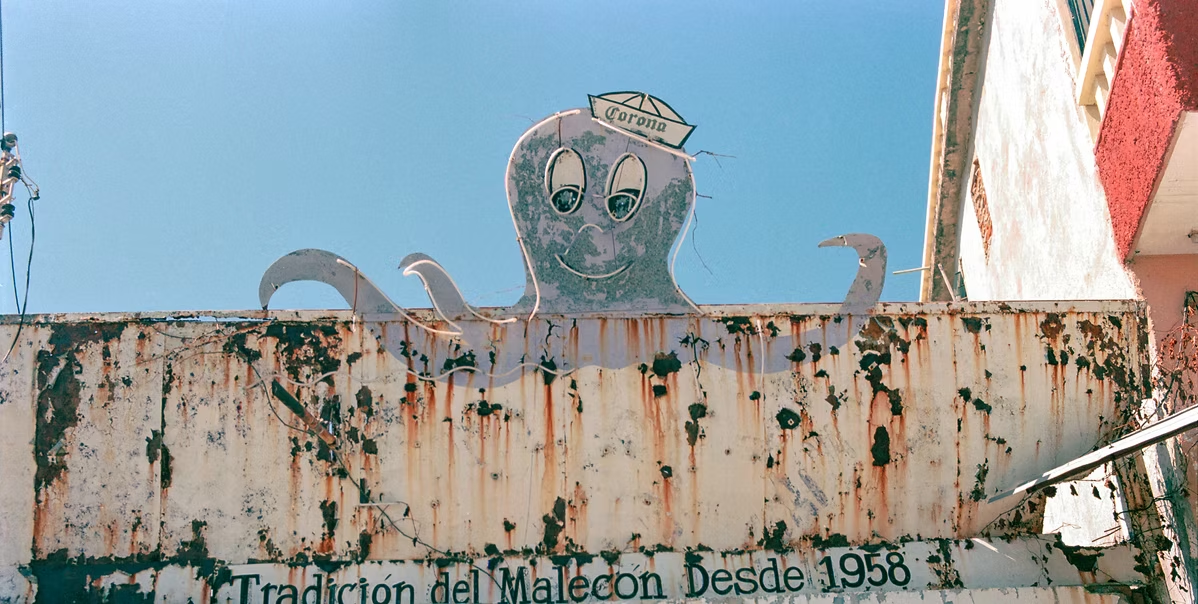
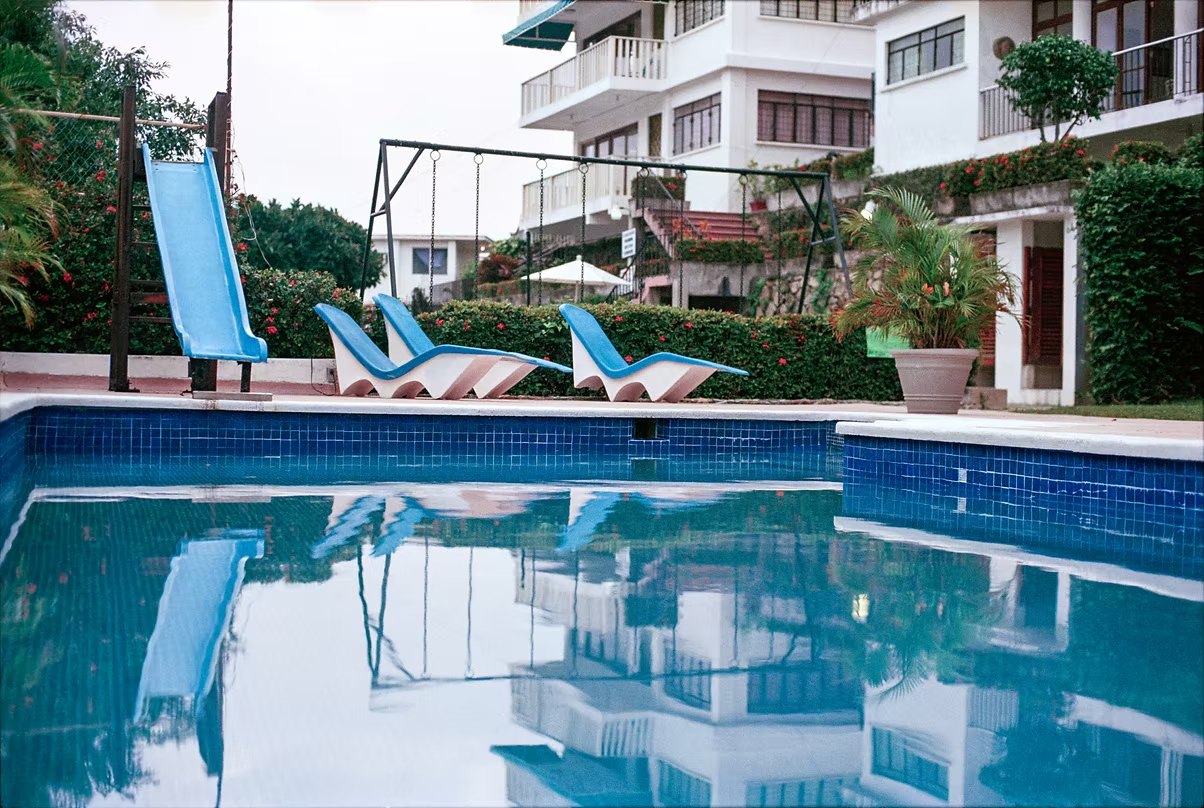
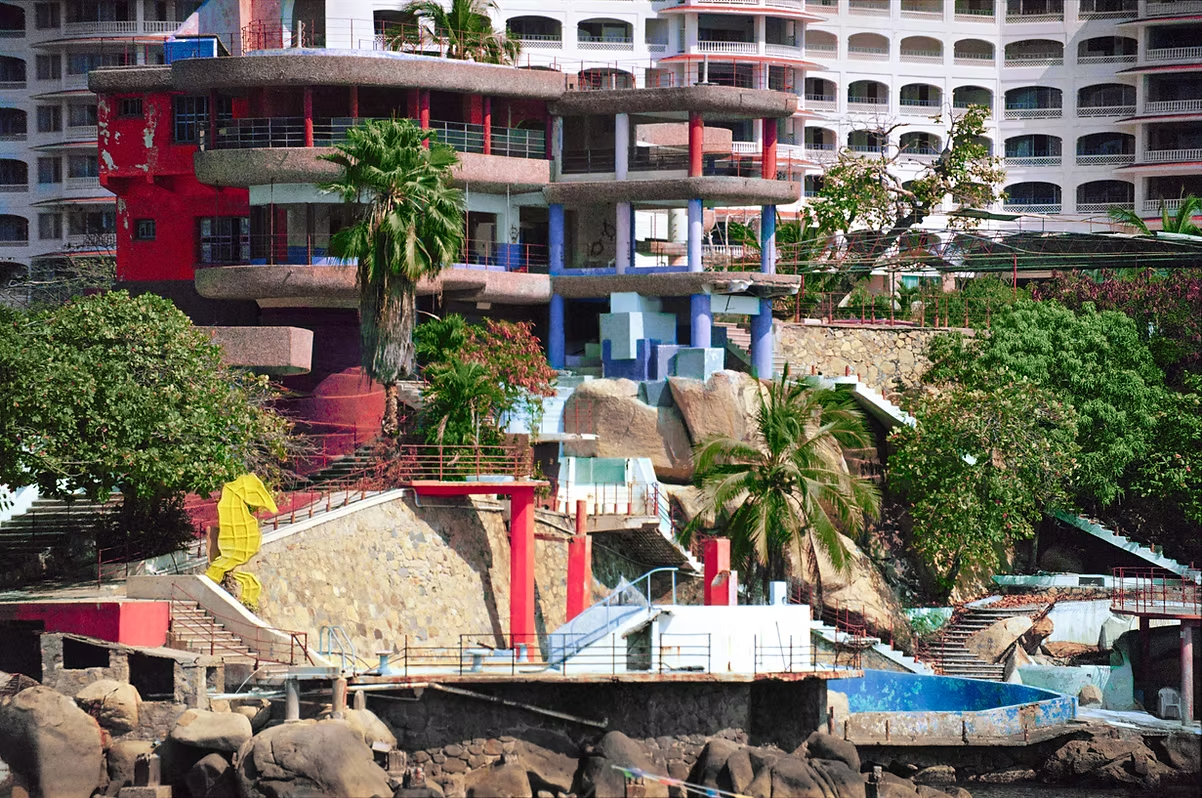
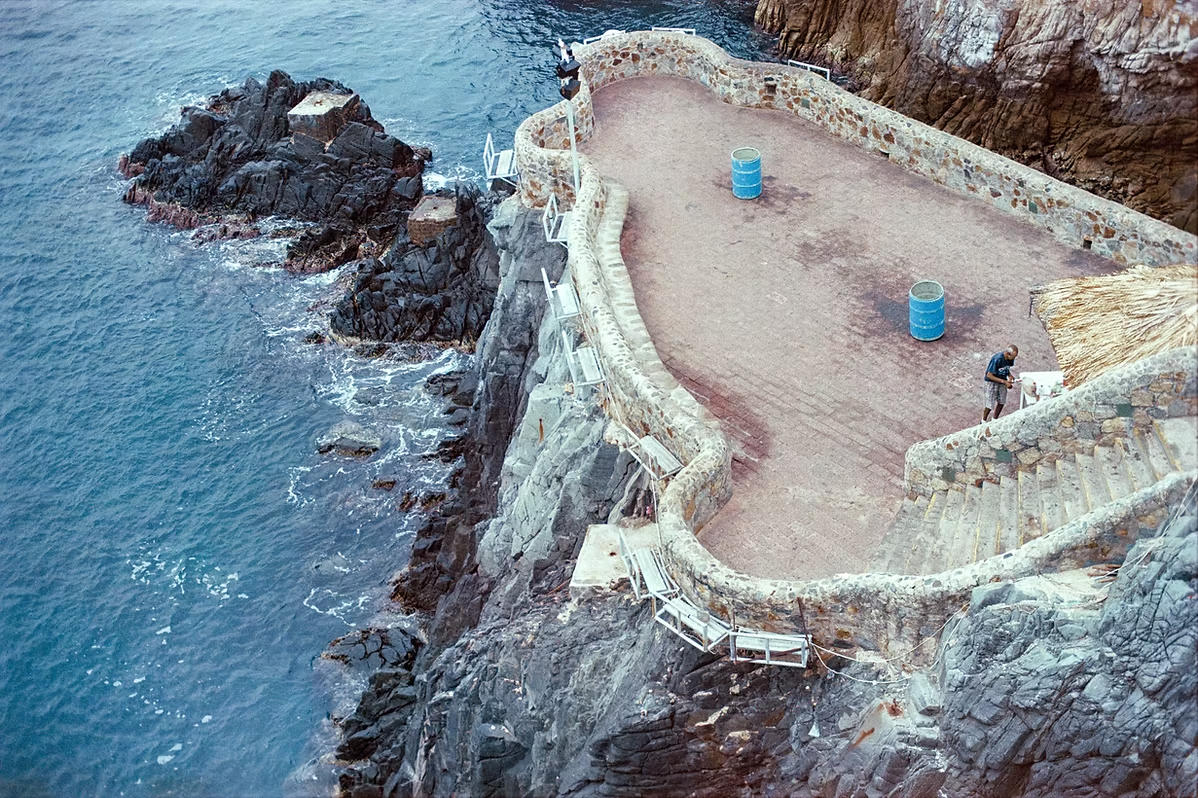
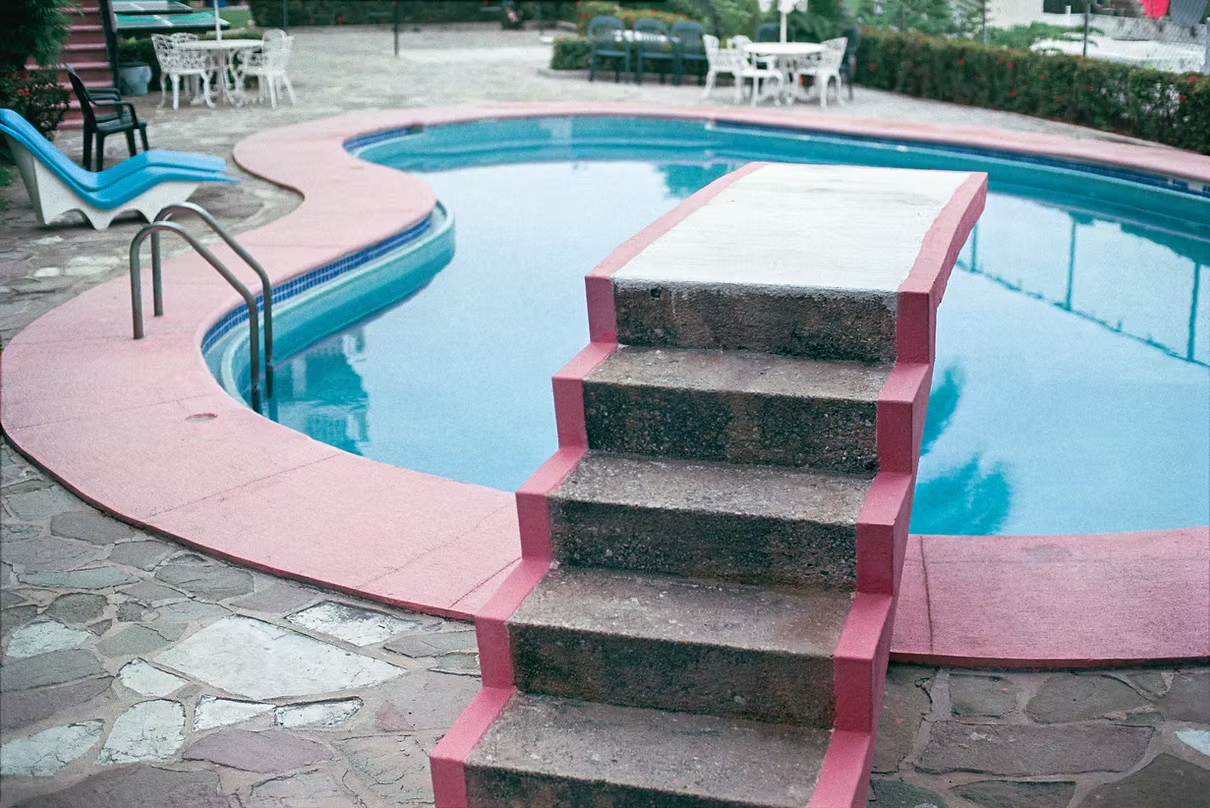
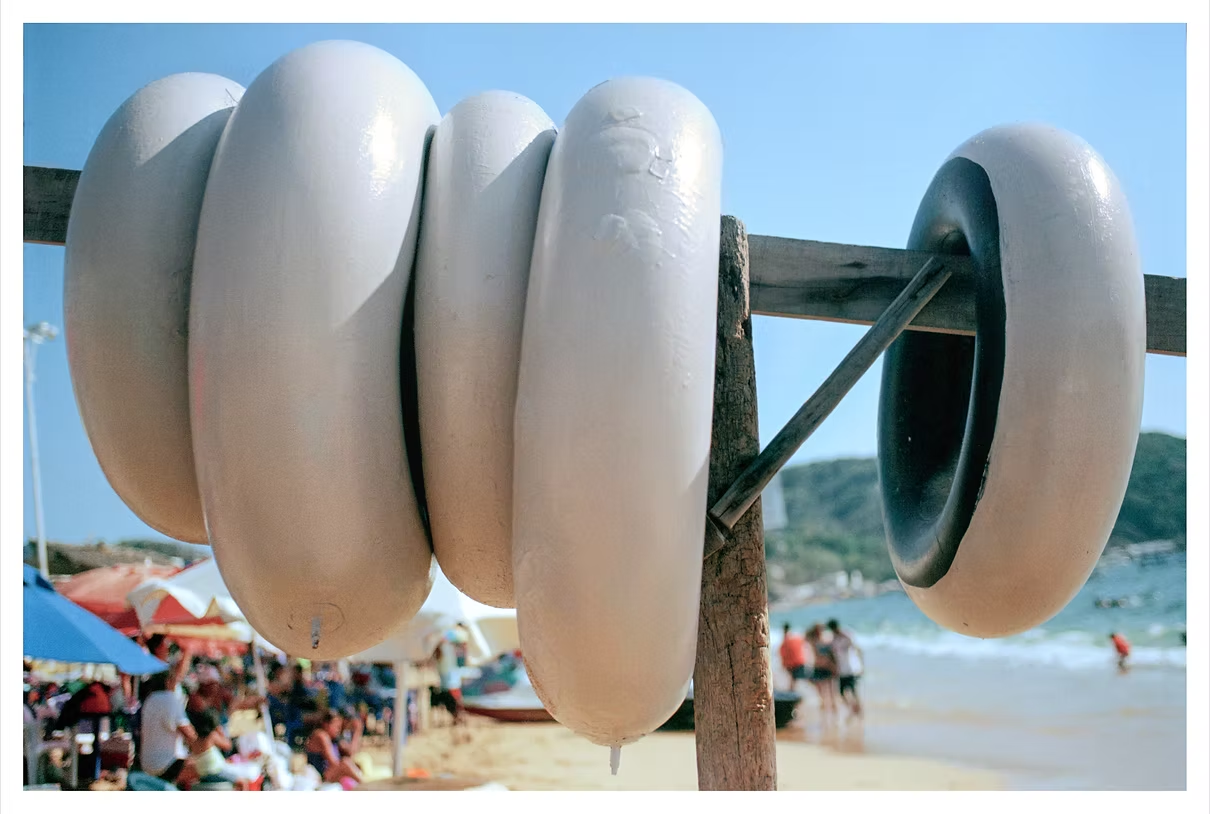
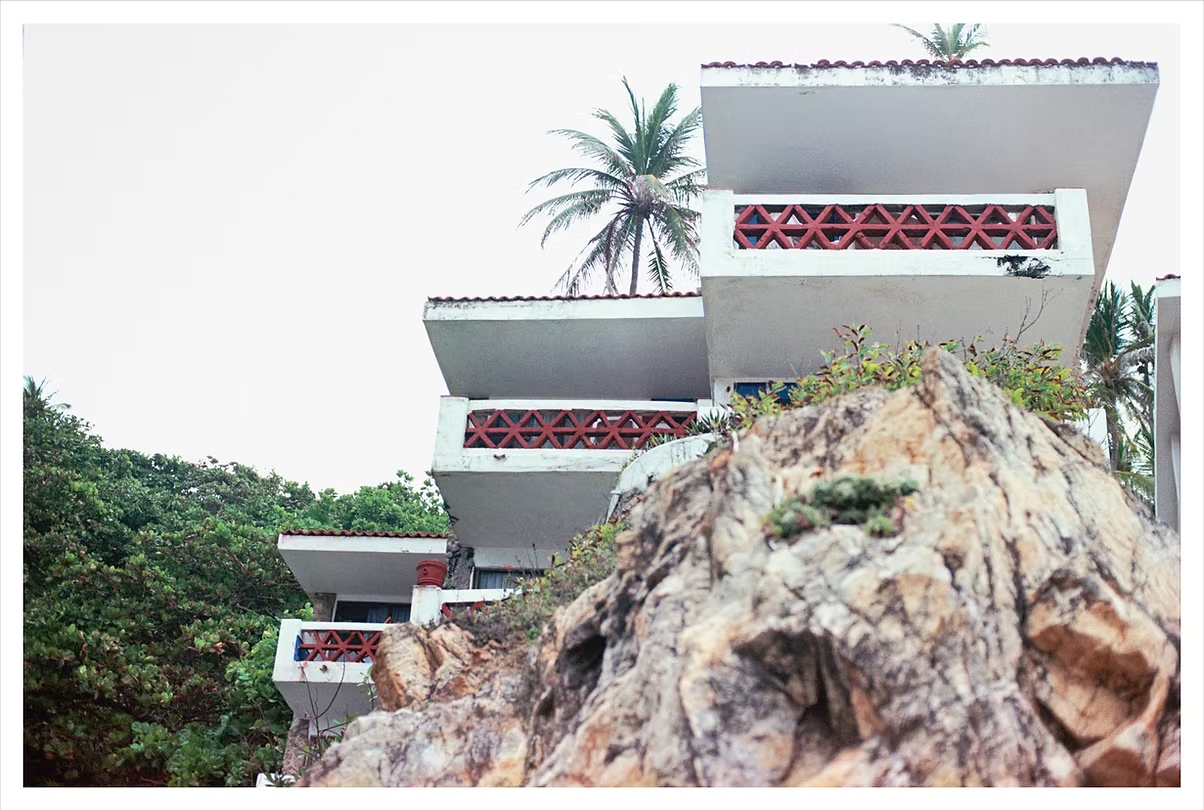
Catherine Abitbol’s photographic work can be defined by being the exact combination of documentation, memory and desire, nostalgia being an inherent part of it. She uses the camera as an extension of her body and the result is a visual solution that responds to the formal composition. Analog absolute, what remains is hard to forget.
For her, photography is a daily hunt, an immediate action taking place on paper, and once it is observed it becomes an extraordinary meditation on the power of capturing an instant.
Q & A
What do you consider your greatest artistic achievements?
As Jorge Luis Borges used to say: “Art is not what makes us feel like we have discovered something new, but what makes us feel like we have remembered something important that we had forgotten.” And this is what I do in my work—I convey a deep feeling of happiness or nostalgia to people; perhaps I awaken a memory in the person who observes my work. Whenever I can achieve this, I feel quite happy. The best outcome is when they remember one of my pieces some time after having first observed it.
I think one of my achievements has been developing the ability to photograph people on the street, what they call “street photography”, without ever creating a set; I have never retouched reality, nobody ever sees things in the same way as you do.
My photographs have been exhibited at the Cordoba Biennial in Veracruz, at the Museum of Modern Art for the México Vivo Foundation, at the South Hampton Art Fair, at the Bijoux exhibition at the Franz Mayer Museum, at the Open Gallery of the Fences of Chapultepec Forest, SIVAM, in several editions of Zona Maco Arte Contemporáneo, and more recently, in the section curated by Johann Mergenthaler in Maco Foto Solo. I have made seven individual exhibitions in different locations. Recently, my ‘Boca Roca’ series was acquired by the Casa Malca Hotel in Tulum to present a specific installation within its art collection.
What kind of cameras and techniques do you prefer?
The cameras I use are analog; my favorite one is a medium format Contax camera, and a Nikon F100 that have stayed with me throughout my career.
Do you consider digital technologies to be advantageous or disadvantageous for professional photography?
Digital photography has allowed the eradication of many paradigms around the craft, as it provides an automatic method, plus a simpler and more practical scope for any photographer. It has allowed immediacy and simplicity to exist in the photographic technique, without questioning the photographer’s technical or artistic capacity. However, in my opinion, an important part of the artistic aspect of it has been lost: the magic of the dark room, of touching the paper, of the surprise and excitement when the image that you have longed to see appears in the trays under dim lighting, to smell the chemicals, to feel the photograph and choose the images in the contact sheets—the closeness and relationship you establish with your picture during those working hours in the dark room. Analog photographs are infinitely more thoughtful when taken, more calculated, more careful. The result of an analog photograph has texture, it has a soul. Nowadays I only work with this method.
What is the process of choosing a theme for your collections?
My greatest satisfaction is going places where I have never been before, where I am amazed by what I see, what I find. It’s a story of my own without a specific process; I let it flow spontaneously.
Is photography an extension or a mirror of reality?
Photography is a mirror of my reality—one which I see and feel: what I think, what rises curiosity in me, anguish, desire, interest, or happiness. Photography is a reality that I want to share, and that I want to keep with me. The pictures I take are portraits of my time and the history of my life; they are the product of an intimate process in which I find a connection between the images I observe and something that lives inside of me. “Nothing is ever the same as they said it was, it’s what I’ve never seen before that I recognize”- Diane Arbus.
Do you merge other arts and textures with your photographs?
A few years ago I did some work using painting as support to award three-dimensionality to my craft. This technique does not define my work; it is only an expression within it. I think all arts can be complemented. In Contemporary Art everything is valid, but I always return to photography in its unique and original form.
Does life surprise you with images or do you premeditate them?
I have never allowed myself to plan anything. Life surprises me with images; that is what life is made of— flashes of curiosity, cultures, faces, emotions, so many different forms of the human being’s existence, the life of animals, of nature. And this is what I capture. I make a portrait of a person as well as an animal: in search of their souls. You must let life surprise you; this is the magic that photography gifts me with.
Do you think there is a “democratization” of photographic art?
If we understand by democratization the massive or popular diffusion of photographic art in contemporary society, the answer is yes, and I am very happy about that, because art is for everyone.
Is there a common theme between your collections?
There is no common theme in my series. My artistic process is the same, only that it manifests itself in different ways. I almost do not plan my creation; I work every day wherever I am, hoping that fate will put things in their place.